
At Camp Southern Ground, we know growth ripples outward. During the Month of the Military Child, we’re proud to honor the strength and adaptability of military children while recognizing a powerful truth: when a warrior heals and thrives, their children feel it first.
In this blog, Dr. Jenn Selke shares how the work of understanding trauma, building emotional awareness, and choosing growth doesn’t just transform the individual, it shapes the environment children grow up in, creating a foundation for healthier relationships, stronger coping skills, and brighter futures.
Throughout April, we celebrate military children and highlight their resilience. Children sense and are affected by the emotional climate of their homes. They experience the challenges of frequent moves, parents’ deployments, and the uncertainties of military life. Growing up in a military family brings its own struggles and experiences. It can be difficult for a child or teen to say goodbye to friends and family as their family moves to a new location. Children sense when their parents are stressed. How parents manage these situations matters. It shapes how children make sense of stress, relationships, and hard situations throughout life. The key to this process is having a parent that is doing the work of understanding their own trauma, managing their emotions, and learning to respond rather than react. [1]
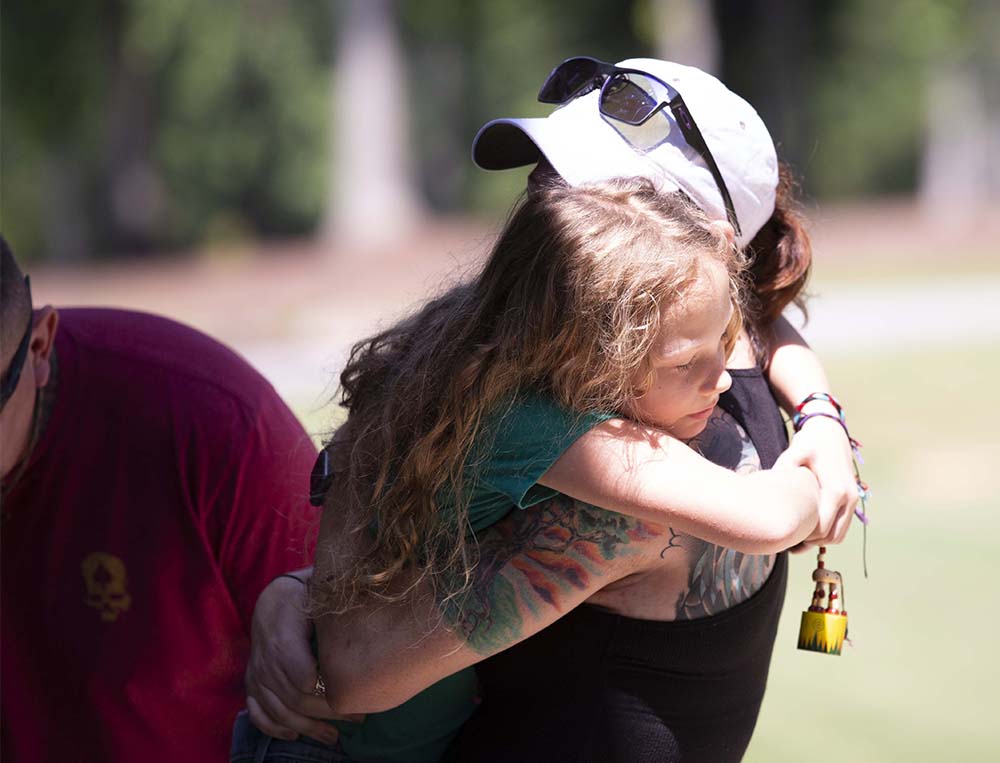
The shift for adults who have experienced trauma is the perspective that it is what happened, not what is wrong with them. They are not their diagnosis. They control the way the story told and the meaning it has. Struggle can also become a source of personal strength. Many parents have a moment when they feel like they are becoming just like the parent they swore they would not emulate. That can be a hard and humbling moment, but that is not a predetermined future. Awareness is the start of change. A parent can learn to pause instead of reacting, to regulate instead of escalating, to apologize, repair, and try again. Those changes matter because children are always watching and learning. They watch how adults respond to stress, handle conflict, and how they recover after a mistake. Children are learning how to treat the people they love and how they should expect to be treated in their own relationships one day.
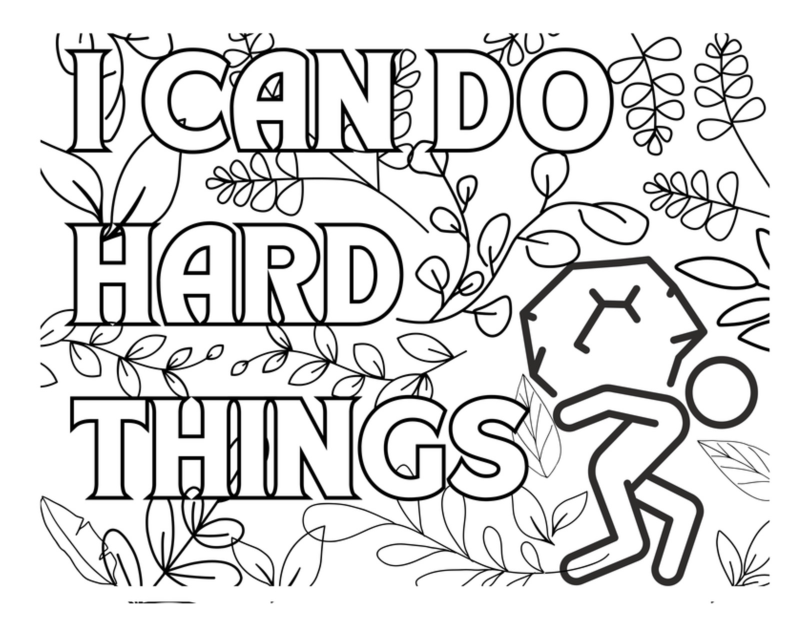
For younger children, we’ve also created some simple coloring pages inspired by these same ideas – designed to help kids build confidence, express emotions, and practice resilience alongside you.
Download Coloring Pages »
Warrior PATHH is one way to begin that work, but every parent can start putting some of these practices into family life today. Here are three practices that are simple and actionable.
Start with gratitude.
A daily practice we teach in Warrior PATHH is gratitude. This is easy to do at home, starting and ending the day with each family member sharing one specific thing they are grateful for. Research suggests that gratitude is linked to improved well-being and more prosocial behavior in children, and that gratitude among parents can strengthen family functioning. [2] A gratitude practice also helps children notice positive moments in their day and strengthen their connection to their parents.
Practice regulation.
Children, like their warrior parent, can benefit from learning how to handle big feelings and calm themselves when the wave of emotion hits. Children learn how to regulate from the adults around them. Have a few regulation activities ready to go for those moments your child is dysregulated. In Warrior PATHH, we teach different breathing techniques. You can also go for a walk, get outside, and listen rather than try to fix a problem. Regulated adults become a partner for their child who is experiencing big feelings. When a parent stays calm, they help their child’s nervous system settle down, too. Children learn self-regulation through their relationships with regulated adults. In military families specifically, fathers’ emotional regulation has been linked to child adjustment through parenting behavior. [3] A parent who learns to regulate their own emotions, especially on those hard days, is not just helping themselves. They are showing their child how to do the same.
Learn repair.
As warriors learn better patterns of behavior, practice gratitude, and stay regulated, there will be moments when they say words they regret, raise their voices, or slip back into behaviors they thought they had left behind. Learning to apologize and repair is critical. Military culture can train people to see mistakes as costly and something to avoid. When that mindset comes home unchecked, children can start to feel that mistakes are not allowed. Be a parent who can make amends. One practical way to repair is to teach parents and children to ask for a do-over. This gives both parent and child a chance to slow the moment down, reset, and try again with different words and some self-regulation. It teaches a child that mistakes are not the end of the relationship and that, with a do-over, you can try again. Research on parent-child repair supports that idea: when families recover more effectively after a rough interaction, children tend to show better emotion regulation and fewer behavior problems over time. [4]
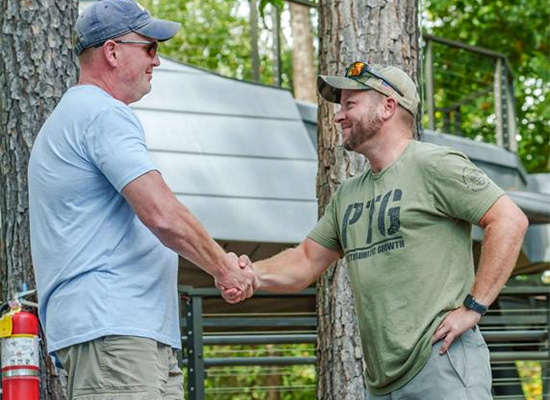

Are you ready to be part of that ripple effect? Take the next step with us.
Learn more about Summer Camp | Warrior Family Camp | Warrior PATHH | Warrior Week
NOTES
[1] Patricia Lester, Kris Peterson, James Reeves, Larry Knauss, Dorie Glover, Catherine Mogil, Naihua Duan, William Saltzman, Robert Pynoos, Katherine Wilt, and William Beardslee, “The Long War and Parental Combat Deployment: Effects on Military Children and At-Home Spouses,” Journal of the American Academy of Child & Adolescent Psychiatry 49, no. 4 (2010): 310-320; Alyssa J. Mansfield, Jay S. Kaufman, Charles C. Engel, and Bradley N. Gaynes, “Deployment and Mental Health Diagnoses Among Children of US Army Personnel,” Archives of Pediatrics & Adolescent Medicine 165, no. 11 (2011): 999-1005.
[2] S. Katherine Nelson-Coffey and John K. Coffey, “Gratitude Improves Parents’ Well-Being and Family Functioning,” Emotion 24, no. 2 (2024): 357-369; Ding Zhang, “The Relationship Between Gratitude and Adolescents’ Prosocial Behavior: A Moderated Mediation Model,” Frontiers in Psychology 13 (2022): 1024312.
[3] Nastassia J. Hajal and Blair Paley, “Parental Emotion and Emotion Regulation: A Critical Target of Study for Research and Intervention to Promote Child Emotion Socialization,” Developmental Psychology 56, no. 3 (2020): 403-417; Jingchen Zhang, Alyssa Palmer, Na Zhang, and Abigail H. Gewirtz, “Coercive Parenting Mediates the Relationship Between Military Fathers’ Emotion Regulation and Children’s Adjustment,” Journal of Abnormal Child Psychology 48, no. 5 (2020): 633-645.
[4] Christine J. Kemp, Erika Lunkenheimer, Erin C. Albrecht, and Deborah Chen, “Can We Fix This? Parent-Child Repair Processes and Preschoolers’ Regulatory Skills,” Family Relations 65, no. 4 (2016): 576-590.